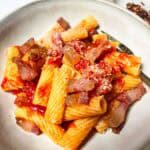
Rigatoni all’Amatriciana
A classic Roman pasta dish, Rigatoni all’Amatriciana combines crispy guanciale, a rich tomato sauce, and a hint of spice for a simple yet flavorful meal. Perfectly al dente rigatoni is tossed in the sauce and topped with Pecorino Romano for a satisfying, no-fuss dinner.
Servings 4 Servings
Calories 862kcal
Equipment
- Large pot
- Large skillet
- Wooden spoon
- Slotted spoon
- Small bowl or dish
- Measuring cups and spoons
- Colander
- Box grater or microplane
- Ladle or measuring cup
- Serving plates or bowls
Ingredients
- 1 cup guanciale sliced into 1-inch strips
- ¼ cup dry white wine
- 1 28 ounce can whole San Marzano tomatoes crushed by hand
- 1-2 teaspoon crushed red pepper flakes optional, adjust based on spice preference
- 1 pound rigatoni
- Salt and freshly cracked black pepper to taste
- ⅛ teaspoon sugar optional, to adjust acidity
- Pecorino Romano cheese for garnish

Instructions
- Cook the guanciale: Place a large skillet over medium heat and add the guanciale. Cook for about 4 minutes, stirring occasionally as the fat renders and turns clear. Keep a close eye on it to prevent overcooking. Once the fat is clear, remove the skillet from the heat and let the guanciale finish cooking in the residual heat.
- Remove the guanciale: Once the guanciale is cooked through (but not browned), use a slotted spoon to transfer it to a dish and set it aside. Reserve some of the guanciale for garnish.
- Deglaze the pan: Return the skillet to the stove over medium heat. Once the pan is hot, add the white wine and scrape up any browned bits from the bottom with a wooden spoon. Let the wine cook for 2-3 minutes until slightly reduced.
- Make the sauce: Add the crushed tomatoes to the skillet, followed by the red pepper flakes (if using), salt, pepper, and sugar (if using). Sugar helps balance the acidity of the tomatoes, but it’s optional based on your preference. Stir well to combine and let the sauce simmer for at least 8-10 minutes, stirring occasionally. The longer it simmers, the better the flavor.
- Cook the pasta: Bring a large pot of heavily salted water to a boil. Cook the rigatoni 1 minute less than the cooking time indicated on the package for al dente texture. Reserve ¼ cup of pasta water before draining.
- Combine everything: Add the guanciale (except the reserved portion for garnish) back to the skillet with the tomato sauce, stirring to combine. Remove the skillet from the heat, then add the cooked rigatoni to the sauce. Stir gently to avoid breaking the rigatoni. Slowly add the reserved pasta water, a little at a time, to create a silky, well-coated sauce.
- Serve: Plate the pasta and garnish with the reserved guanciale, freshly grated Pecorino Romano cheese, and a crack of black pepper. Serve immediately and enjoy!
Nutrition
Serving: 1Serving | Calories: 862kcal | Carbohydrates: 85g | Protein: 21g | Fat: 47g | Saturated Fat: 17g | Polyunsaturated Fat: 1g | Monounsaturated Fat: 0.2g | Cholesterol: 64mg | Sodium: 522mg | Potassium: 264mg | Fiber: 4g | Sugar: 3g | Vitamin A: 0.3IU | Vitamin C: 0.02mg | Calcium: 25mg | Iron: 2mg