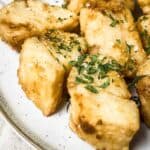
Baccalà Fritto (Fried Salt Cod)
Enjoy crispy Baccalà fritto (fried salt cod), a traditional Italian dish perfect for festive occasions or as a flavorful appetizer or main course.
Servings 6 Servings
Calories 586kcal
Equipment
- Large bowl (for soaking the cod)
- Sharp knife (for cutting the cod)
- Paper towels or wire rack (for draining the fried cod)
- Large frying pan or skillet
- Tongs or a slotted spoon (for turning the cod and removing it from the oil)
- Small bowl (for flour)
- Plate (for dredging cod)
- Oil thermometer (optional, to ensure the oil is at the right temperature)
- Serving Platter
Ingredients
- 1 to 1 ½ pound dried salt cod "baccalà" soaked (soak in cold water for 24 hours, changing the water 3-4 times)
- ½ cup neutral oil for frying such as vegetable or canola oil
- 1 cup all-purpose flour
- 1 bunch fresh parsley chopped for garnish
- 4-10 lemon wedges for serving

Instructions
- Prepare the baccalà: After soaking the dried salt cod for 24 hours, drain and pat it dry. Cut the cod into bite-sized pieces to ensure even cooking.
- Heat the oil: Pour a neutral oil (such as vegetable or canola) into the frying pan, about ½ inch deep, and heat over medium-high heat until hot but not smoking. (If using a thermometer, aim for 350°F.)
- Dredge the cod: While the cod is still slightly moist but not dripping, dredge each piece well in flour. Shake off any excess flour, but don’t worry if some spots have a thicker coating.
- Fry the cod: Carefully place the cod pieces into the hot oil, making sure not to overcrowd the pan. Fry until golden and crispy on one side, then flip and cook the other side until golden. Once done, remove the cod with tongs or a slotted spoon and drain on a wire rack or paper towels.
- Fry the parsley: In the same oil, fry the parsley sprigs for just a few seconds until crisp. Remove and drain on paper towels.
- Serve: Arrange the fried cod on a serving platter, garnish with the fried parsley, and serve with lemon wedges on the side. Enjoy immediately or at room temperature.
Notes
- Testing the oil without a thermometer: If you don’t have an oil thermometer, you can test if the oil is ready by dipping the handle of a wooden spoon or a wooden chopstick into the oil. If bubbles form steadily around the wood, the oil is hot and ready for frying. If the bubbles are vigorous and splattering, the oil is too hot and should be cooled slightly.
- Avoid overcrowding the pan: Fry the fish in small batches to maintain the oil’s temperature and ensure even cooking.
- Oil temperature: If the oil is too cold, the shrimp will absorb too much oil and become greasy. If too hot, they will cook too quickly on the outside without cooking through.
- Avoid Olive Oil: While olive oil adds great flavor to dishes, it has a low smoke point, meaning it can break down and become harmful when heated to high frying temperatures. For frying, it's better to use neutral oils like vegetable or canola oil, which can handle the higher heat without burning or producing unwanted compounds.
Nutrition
Serving: 1Serving | Calories: 586kcal | Carbohydrates: 23g | Protein: 74g | Fat: 21g | Saturated Fat: 3g | Polyunsaturated Fat: 11g | Monounsaturated Fat: 5g | Trans Fat: 0.1g | Cholesterol: 172mg | Sodium: 7974mg | Potassium: 1778mg | Fiber: 3g | Sugar: 2g | Vitamin A: 189IU | Vitamin C: 42mg | Calcium: 204mg | Iron: 4mg